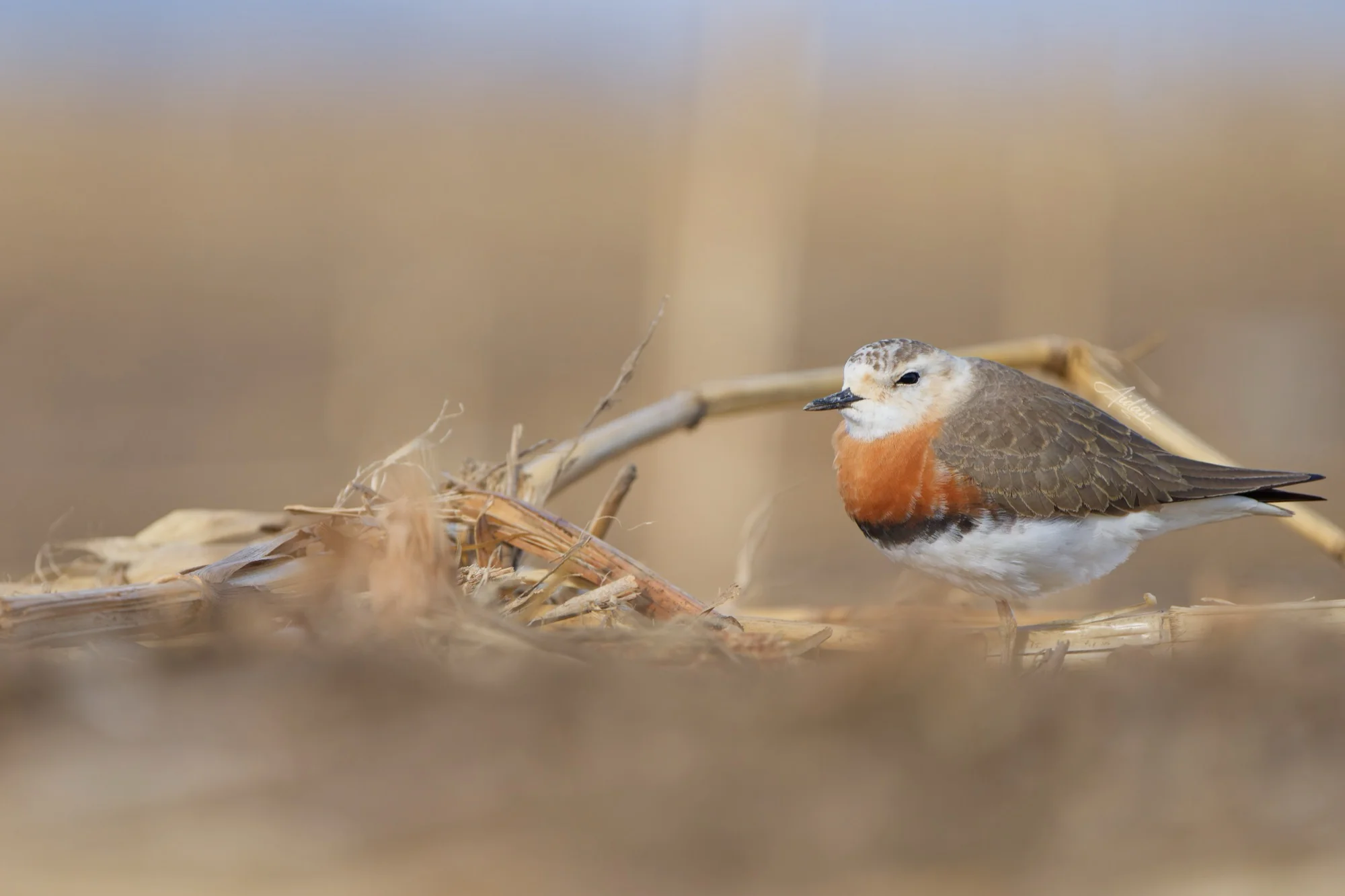
The Oriental Plover is one of the birds I most wanted to see in Beijing. Of course I was drawn to its gradient, orange-red breast — but it is the years I spent searching for it that bound it to me.
Every spring migration, in that window between late March and early April, Oriental Plovers pass through Beijing just ahead of the big waves of shorebirds. Four years ago I went looking for one for the first time. Since then, every year at this season, I have gone to Guanting hoping to spot that flash of orange.
My first sighting was in late March of '23 (A Leopard Cat brushed right past me!) — possibly the first record of that year's spring migration in Beijing, but only a silhouette flying by.
Then I kept searching, and searching, and searching — yet I could never meet it again. '22: A disappointing horse ranch, a surprising Temple of Heaven; '23: Qingming holiday — searching for the Oriental Plover again; '24: Early spring, time for the horse ranch again, Back to the horse ranch, Qingming holiday — so close to the Oriental Plover; '25: Guanting Reservoir — searching for the Oriental Plover, Pochard gatherings and raptors in flight — birding at the horse ranch and Wild Duck Lake in wild winds, Guanting Reservoir — 81 species recorded; '26: First visit to the horse ranch — searching for the Oriental Plover.
I believe persistence always pays off — it is only a matter of time. Today, I stepped once more into that familiar reservoir, looking for the bird that had become so mythical to me.
Beside Guanting Reservoir stretched a boundless field of farmland, with water and reeds alongside — perfect habitat for Oriental Plovers. With nothing but hope, I started walking into the fields. From time to time the low booming of an Eurasian Bittern rose from the reeds, while overhead came the calls of Little Ringed Plovers and a flock of Mongolian Short-toed Larks passing by. The damp earth was covered in shorebird footprints; apart from the raging wind and the birds, there was no other sound. A few steps further, I raised my binoculars toward the distance — and a miracle happened. The two flashes of orange I had chased for four years appeared in my view. It was one of the most thrilling moments of my birding life. Just like that, after three years, we met again — the persistence of all these years was finally repaid today.
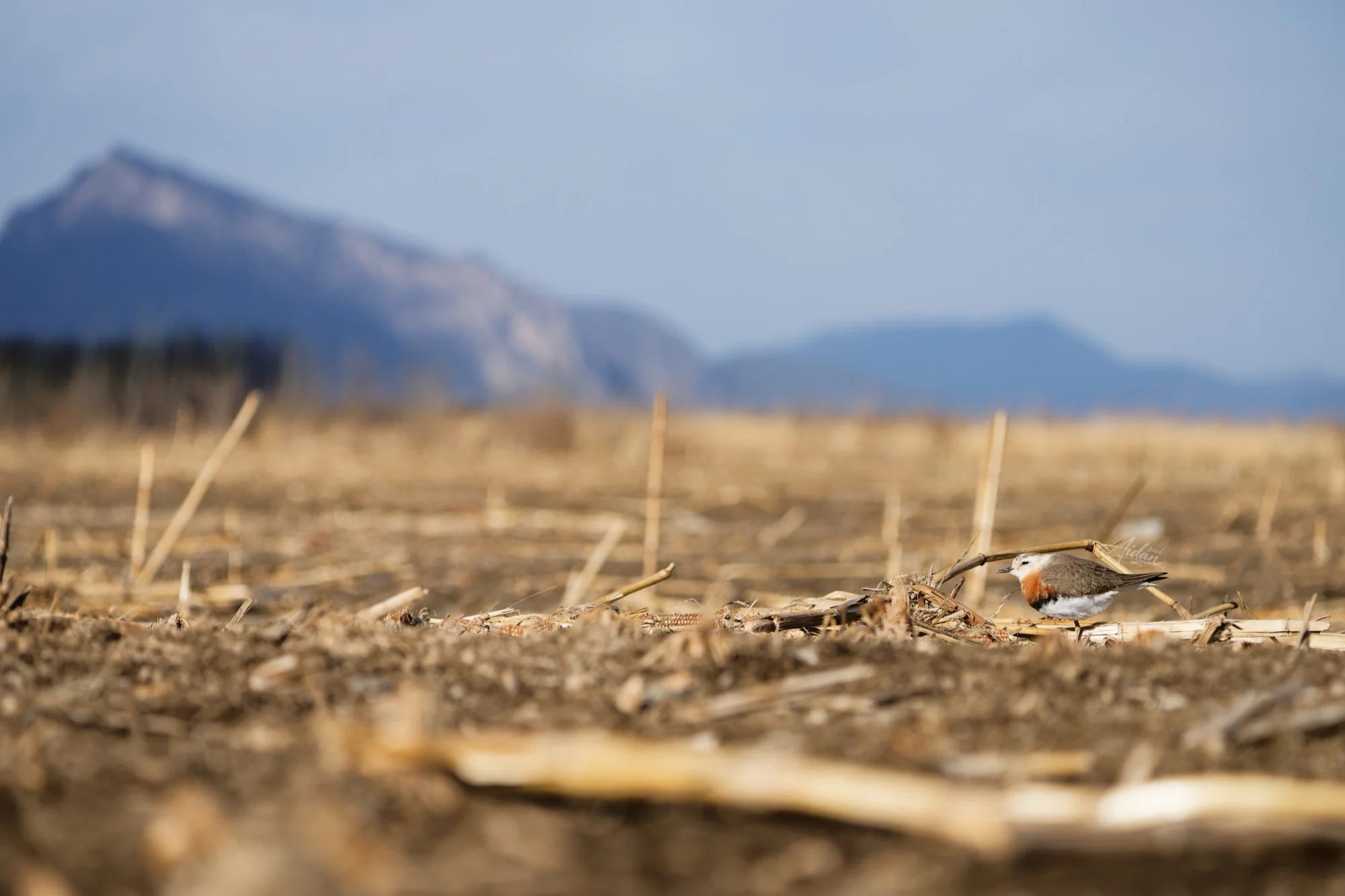
These were two male Oriental Plovers in beautiful breeding plumage — and it isn't even their final form: their heads will turn almost white in the breeding season, and the orange-red of their breasts will grow even more vivid. They had come all the way from their wintering grounds in Australia, and by the time they reached Beijing their migration was already half done — their breeding grounds in Inner Mongolia and Mongolia were not far away.
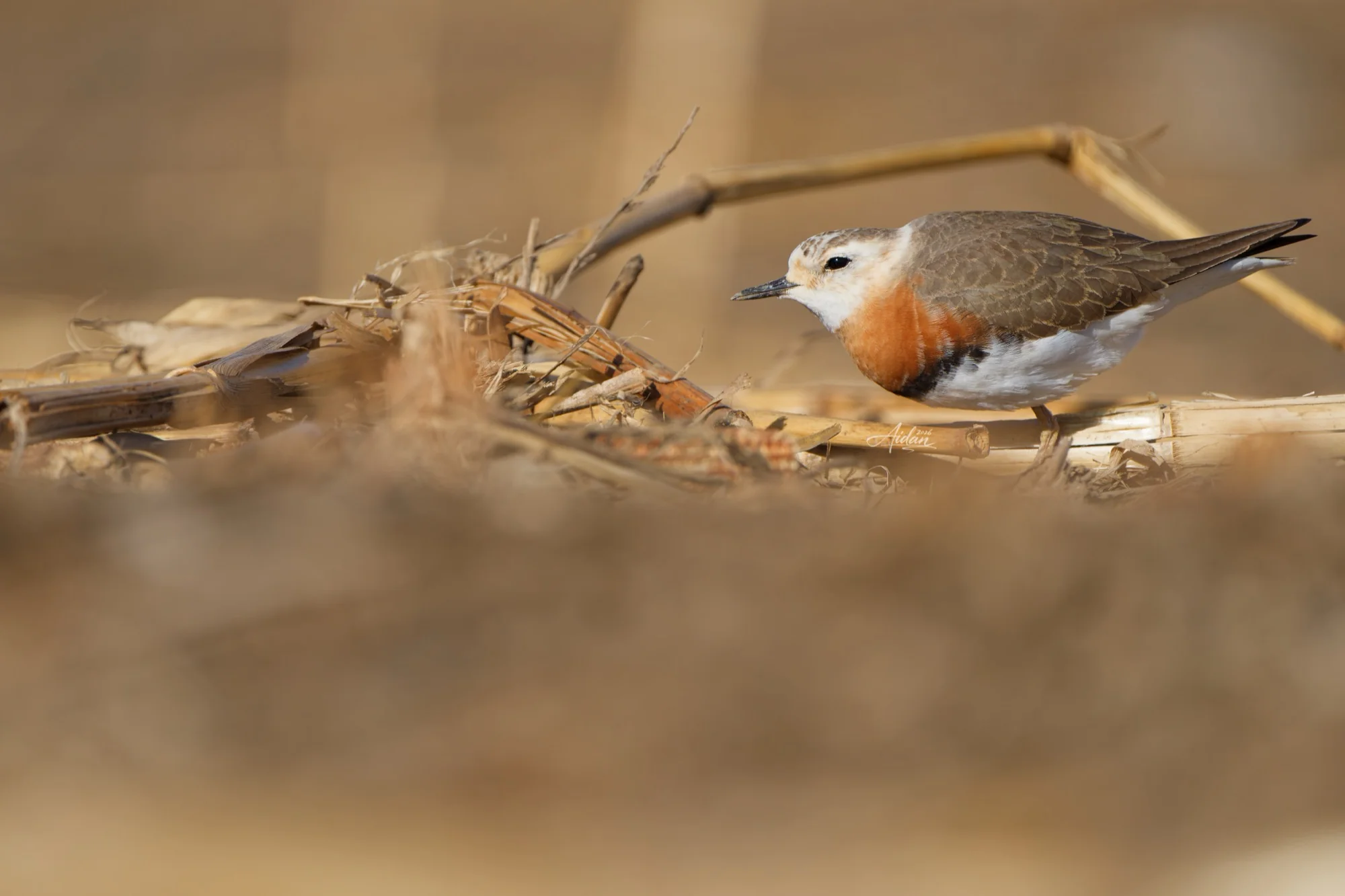
I lay down in the field, terrified of disturbing them, and watched without moving a muscle. The wind here is fiercer than at the horse ranch; whenever a gust swept through, they would crouch low, holding their stance close to the ground — perhaps so the wind couldn't blow them away. When a Peregrine Falcon sliced across the sky above, or a Common Kestrel hovered overhead, they flattened their whole bodies into the earth, offering the raptors nothing but a back the exact color of everything around them.
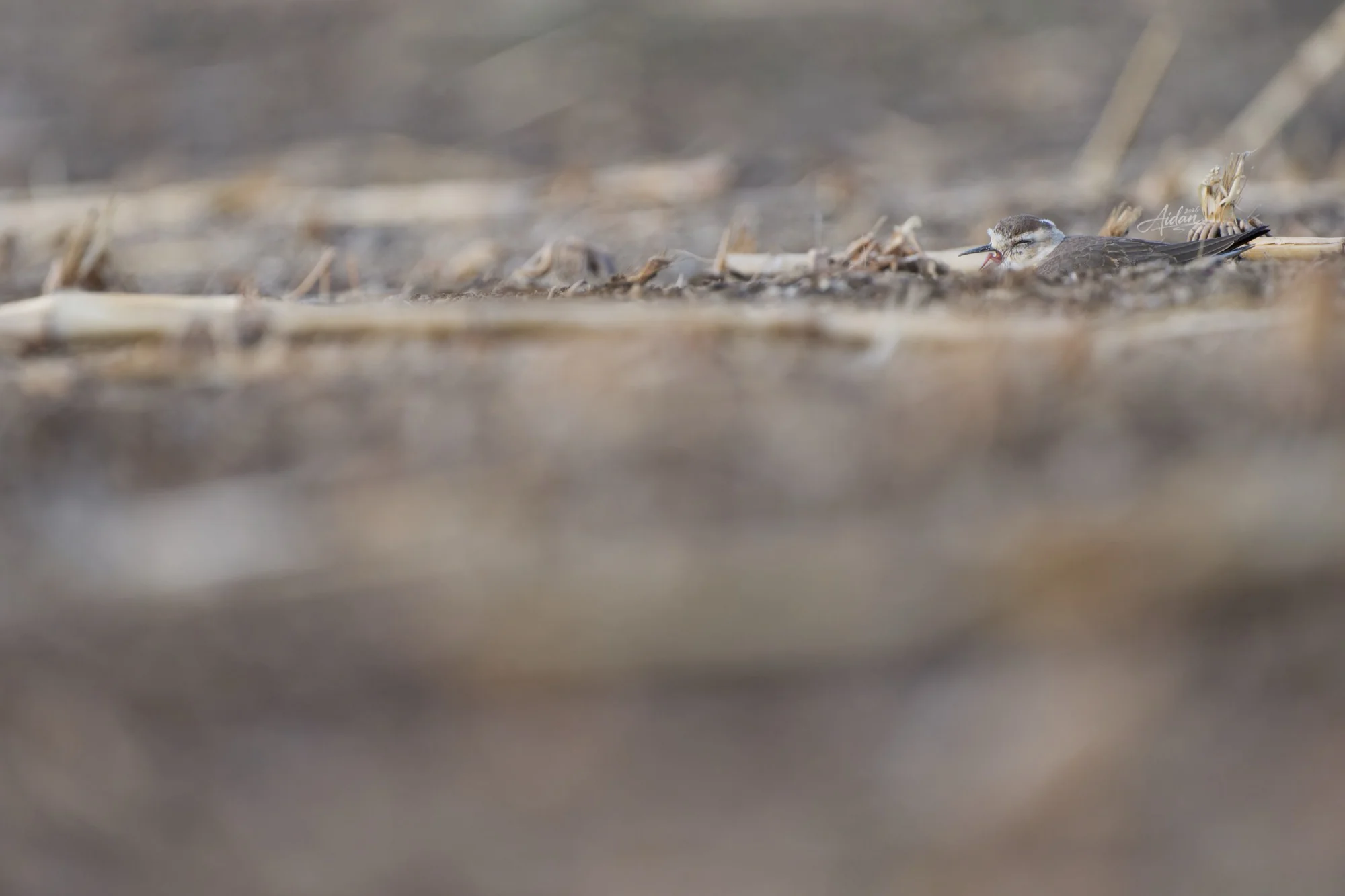
I lay motionless in the field for three hours, quietly observing them, waiting for them to start feeding — but they too rested, nearly motionless, for three hours. They only preened now and then, or yawned, eyes always half open, half closed. Were they simply tired, fresh off their migration?
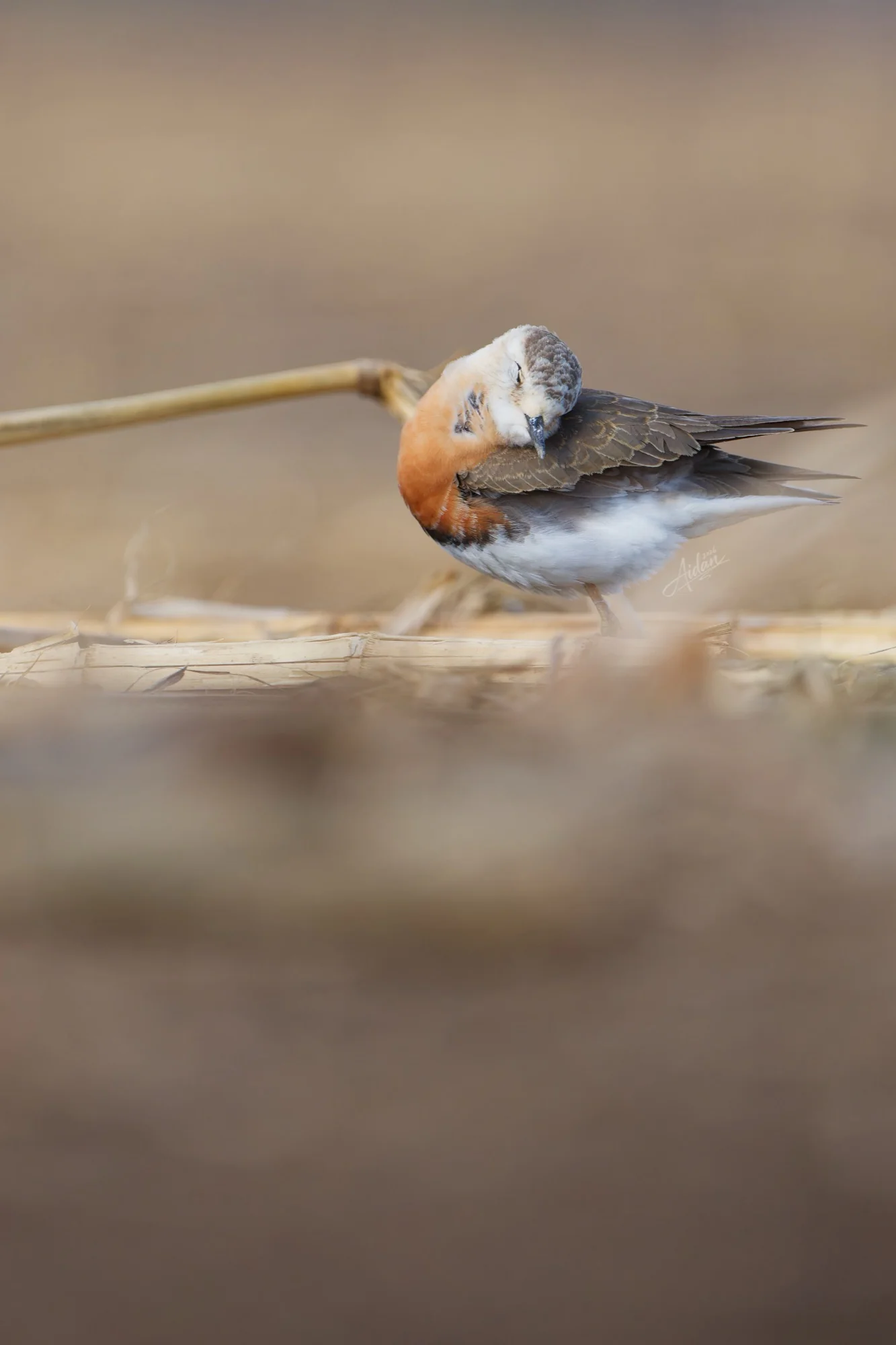
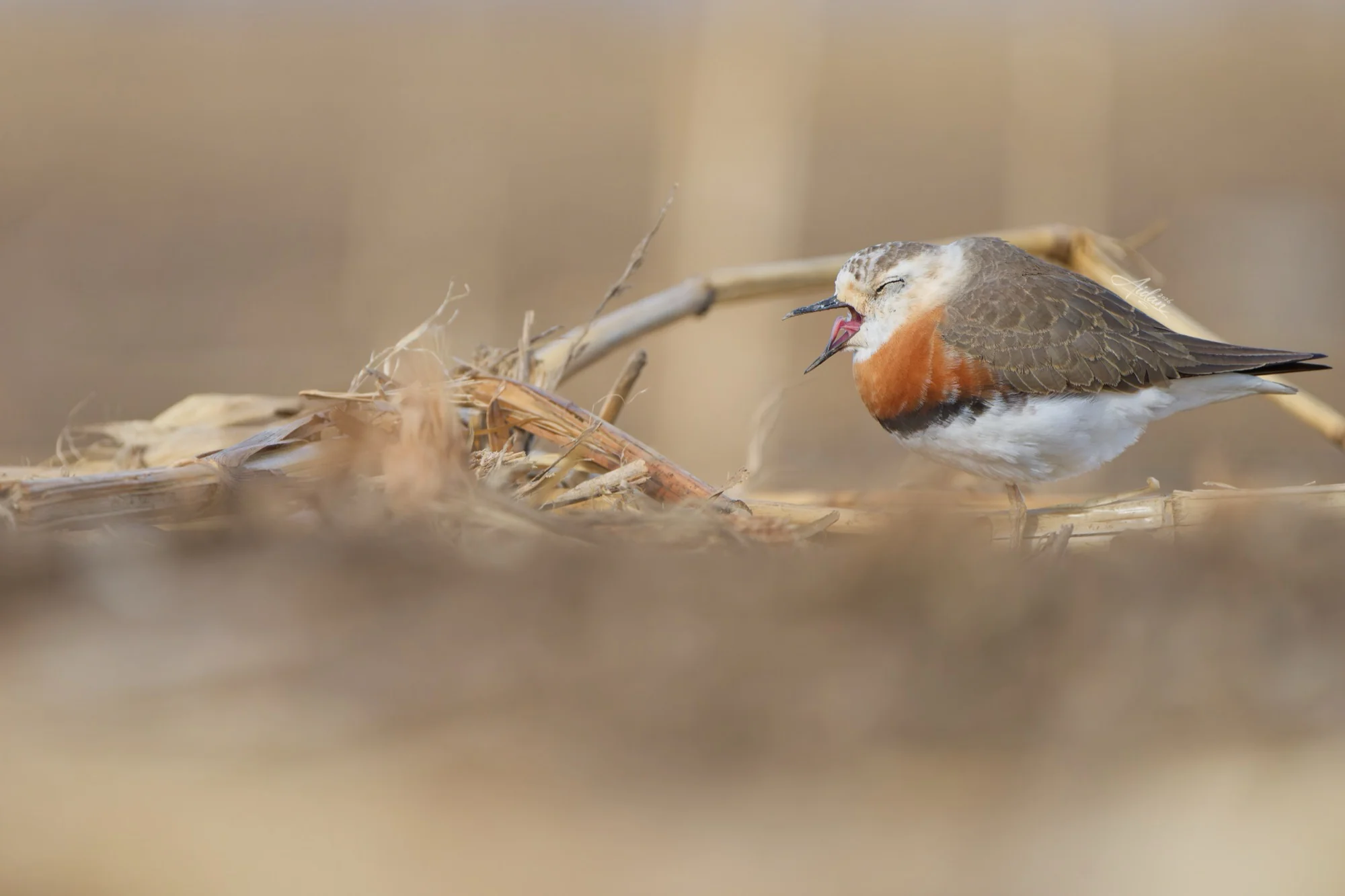
After three hours I could no longer take the wind and the steadily cooling air. With my shoulders and wrists cramping, I quietly crept away. Once I was far off, I looked back: just as when I had first spotted them three hours earlier, they were still crouched beside that broken wheat stalk, resting quietly. I rested in the car for a while, planning to return before sunset — surely they would have to eat something by then. Full of anticipation, I came back to their resting place before sunset. The spot by the broken wheat stalk was empty. I swept everything within view with my binoculars, but the two figures had truly vanished.
Thinking back on their behavior that afternoon, I suspect they had continued their migration. They didn't seem to have arrived that day — they must have filled their bellies in the days before, spent the whole afternoon resting up, and set off again before sunset. You are already close to your destination. May your journey be safe, and may you reach your breeding grounds smoothly.
And you must remember: next year, same time — we meet right here again.